
Underinsurance remains a real risk for Australian businesses.
Vero’s 2025 SME Insurance Index found that 60% of micro businesses (1-4 employees) and 50% of small businesses (5-19 employees) were not reviewing their insurance cover annually.
This lack of review doesn’t just leave SMEs exposed. Brokers can also carry professional and reputational exposure when their clients fail to review limits, reduce cover, or choose not to renew policies.
What is prompting underinsurance in SMEs?
Vero’s research found that reasons for underinsurance typically fall within three categories:
Lack of concern
For two-thirds of businesses, underinsurance isn’t something they’re worried about.
Vero’s 2026 SME Insurance Index highlights stable premiums as one area driving this indifference. When prices were flat, 20% of businesses actively avoided increasing sums insured—even though they were aware that replacement costs had increased. Just 11% of businesses did the same in response to rising premiums.
Stable premiums may mask growing exposures or cause business owners to overlook gradual reductions in their cover. In fact, 28% of businesses either reduced their overall insurance cover or cancelled some policies in response to flat premiums.
Intentional cost-saving strategy
Underinsurance is a deliberate way to save money for some SMEs.
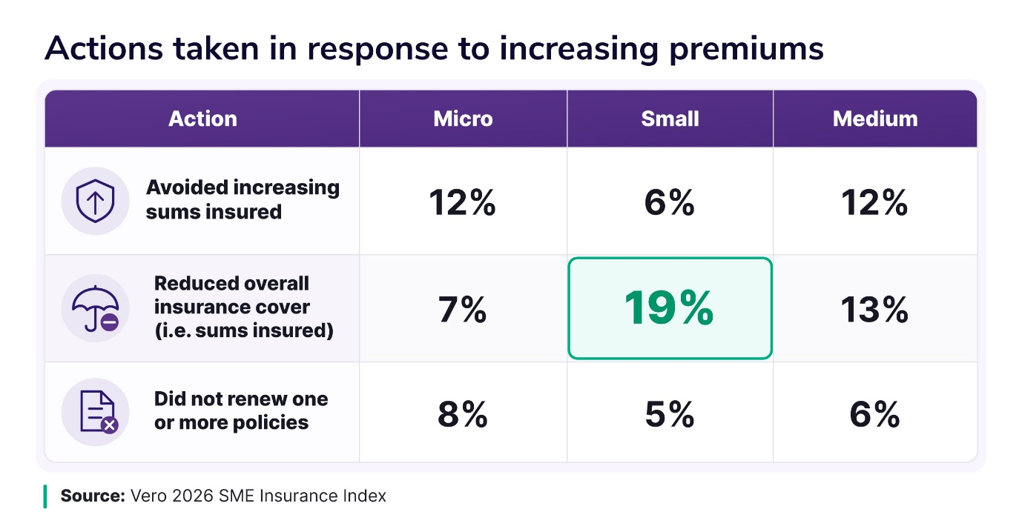
When premiums went up, some micro and medium-sized businesses chose to not increase sums insured. Small businesses were most likely to reduce their overall insurance cover.
Risk blind spots
Eighty percent of businesses told Vero they did not have a formal risk management process, down from 91% in 2025.
While businesses are slowly shifting from awareness to action, many may also be overlooking key areas of risk. Just 16% of businesses were conducting regular risk analyses.
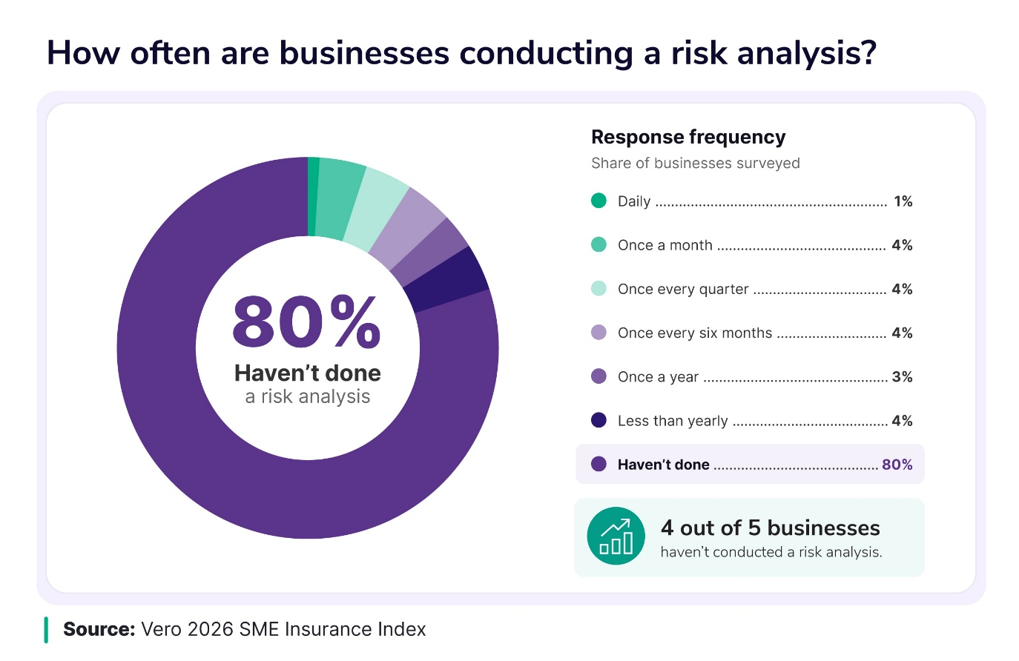
Micro (83%) and small businesses (74%) were most likely to say they had not completed a risk assessment.
Where are SMEs underinsured?
While underinsurance can occur in any type of cover, business interruption is one area of potential concern. Forty five percent of respondents in Vero’s survey either don’t think or don’t know if a major interruption in operations could happen to them.
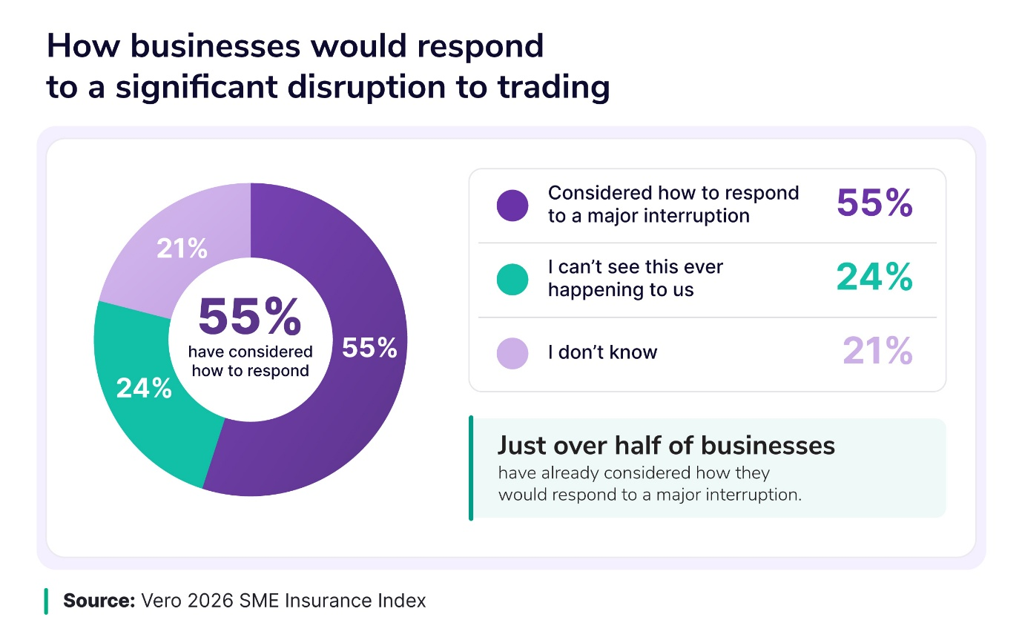
Of the 55% who have considered how to respond to a major interruption, just 6% have Business Interruption cover.
BizCover for Brokers internal claim data reveals another potential area of underinsurance for SMEs – Theft cover. This was the most common claim type submitted by B4B brokers in FY2025 but is often an area where SMEs either do not have cover or mistakenly think they are protected by other policies (i.e., Contents or Portable Equipment).
From 2020-25, Food & Drink businesses submitted the most theft claims (including cafes/coffee shops, restaurants, and takeaway shops). Retail, Beauty, and Trades also topped the list of most stolen-from sectors during this time.
SMEs may also have inadequate or no Cyber Insurance cover. According to data from CyberWardens, 82% of Australian small businesses experienced a cyber incident in 2024. While Cyber Insurance uptake is increasing, micro businesses and SMEs account for just 30% of the global market .
How SME underinsurance impacts brokers and how to mitigate your own risk
Underinsurance not only leaves clients at risk; it also creates real risk to a broker’s business and reputation. Fortunately, brokers can take action to reduce underinsurance headaches for SME clients and themselves.
Client education
Product and coverage awareness are essential to addressing underinsurance with clients. SMEs often don’t know what products are available to them or what the policies do (and don’t) cover. This can become a problem for the broker, particularly if a client feels they were not adequately advised on their business risks and insurance options.
Brokers using the B4B platform can access helpful resources that support client education:
- Product videos (accessed by logging in to the platform)
- Claims library
- Cyber threats guide
Accessing a broader insurer market
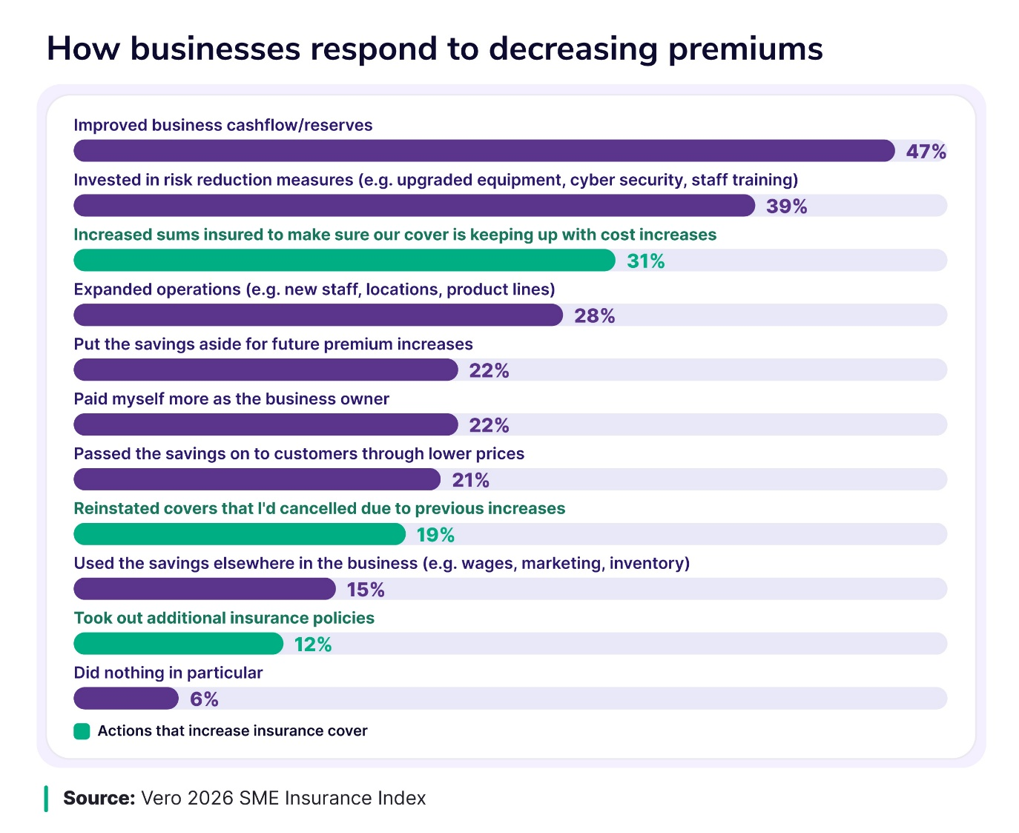
Providing quote comparisons can help clients save money, which they may use to strengthen their overall protection. According to Vero’s 2026 survey, many businesses updated their policies and cover options in response to reduced premiums.
Ensuring clients have adequate cover also benefits brokers. Complex claims, such as those where an underinsurance clause has been invoked, may require significant time and effort that impacts your operational costs and ROI for micro and SME clients.
The B4B platform gives brokers access to eight products from 10 insurance partners with competitive pricing. This makes it easy to quickly fill gaps in cover while helping clients save.
Proactively review client policies
Businesses trust broker advice—with 60% acting on risk advice from theirs. Favourable insurance premiums were among the reasons given for actioning this advice.
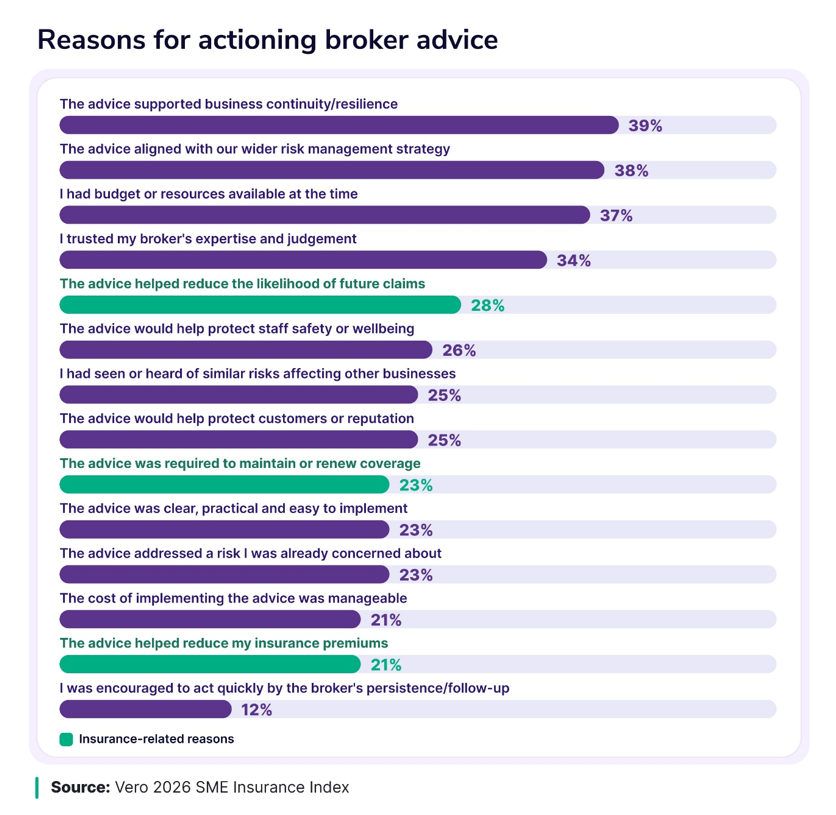
Finding ways to add more value for SMEs can reinforce this trust and help mitigate risk for both parties. Recommending actions beyond getting insurance, such as creating a business continuity plan, may be appropriate for some clients.
The B4B platform reduces quoting and renewal admin, so brokers can quickly review SME cover, compare policies, and cover insurance gaps.
*Based on BizCover for Brokers’ internal claims data between 2020 and 2025.